
The short answer
2-inch olympic weight plates have a 2 in center hole that slides onto an olympic barbell sleeve. They come as bumper (rubber-coated) or cast iron plates, sold in pairs by pound or kilogram. Prices run roughly $2.40 to $3.90 per pound depending on style and brand, per maker pricing checked 2026-09-23.
On this page 15 sections
- The short answer
- What are 2-inch olympic weight plates?
- How do 2-inch plates differ from standard 1-inch plates?
- What types of 2-inch olympic plates can you buy?
- How much do 2-inch olympic weight plates cost?
- What weight can you actually load?
- What collar do you need for 2-inch plates?
- How much floor protection do 2-inch plates need?
- Bumper vs. cast iron: which fits your setup?
- Do you need calibrated plates?
- How do you build a starter 2-inch plate set?
- Where should you store 2-inch plates?
- Bottom line
- Questions
- Sources
What are 2-inch olympic weight plates?
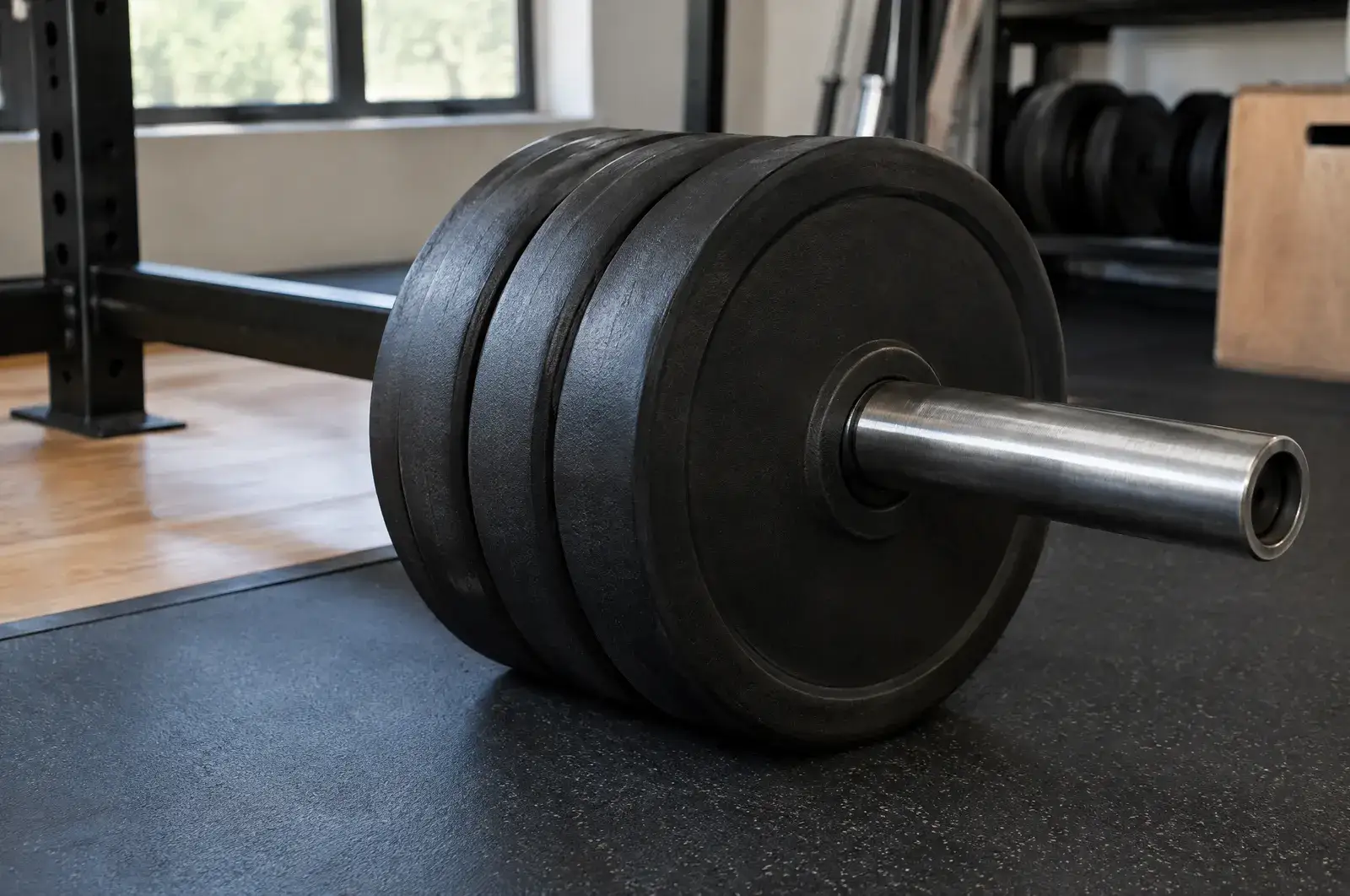
2-inch olympic weight plates have a center hole sized to slide onto a 2 in diameter olympic barbell sleeve. That 2 in bore is the defining feature — everything else (material, color, weight, brand) varies. If a plate is labeled “olympic,” it is built for this sleeve size, not the narrower 1 in sleeve found on standard bars.
Most home gym barbells sold today are olympic bars, so 2-inch plates are the default choice for anyone building a rack-and-barbell setup. See our barbell for weight training guide if you have not picked a bar yet.
How do 2-inch plates differ from standard 1-inch plates?
The hole size is the whole difference. Olympic plates need a 2 in sleeve; standard plates need a 1 in sleeve, and the two are not interchangeable without a sleeve adapter.
Standard plates are usually lighter-duty and cheaper, built for basic barbells rather than rack-rated olympic bars. If you already own standard plates and are upgrading to an olympic bar, check our standard barbell weight plates page before assuming your old plates will fit — they will not without an adapter.
What types of 2-inch olympic plates can you buy?
Three main types show up in home gym catalogs: rubber bumper plates, cast iron plates, and competition-rated bumper plates. Each trades off drop-safety, cost per pound, and storage footprint differently.
| Plate type | Material | Drop-rated? | Example diameter |
|---|---|---|---|
| Bumper plate | Steel core, rubber coating | Yes | 17.7 in (RitFit) |
| Competition bumper | Steel insert, high-density rubber | Yes | 450 mm ± 1 mm, ~17.7 in (Fringe Sport Savage) |
| Cast iron | Solid cast iron | No — lower by hand | Not listed by maker |
RitFit’s bumper plates are tested for durability by withstanding over 12,000 drops, per the maker’s product page. Fringe Sport’s Savage competition plates carry a 90 Shore A durometer rating and are weighed and guaranteed accurate to within 1% of declared weight, with a 7.75 in steel insert for drop toughness. Cast iron plates from Titan Fitness are not rated for dropping and should be set down under control, the same way you would treat any solid iron plate.
How much do 2-inch olympic weight plates cost?
Cost per pound is the fastest way to compare across brands and materials. Using maker prices checked 2026-09-23, bumper plates run cheaper per pound in mid-size pairs and competition plates cost more for tighter tolerances.
| Product | Weight | Price (pair) | Cost per pound (our calculation) |
|---|---|---|---|
| RitFit Color Bumper Plates, 45lb pair | 45 lb each, 90 lb pair | $219.99 | $2.44/lb |
| RitFit Pink Bumper Plates, 10lb pair | 10 lb each, 20 lb pair | $99.99 | $5.00/lb |
| Fringe Sport Savage, 25lb pair | 25 lb each, 50 lb pair | $189.00 | $3.78/lb |
| Titan Fitness Cast Iron Olympic Plate set | 155 lb total (2.5 lb x2 + 10 lb x2 + 25 lb x2 + 35 lb + 45 lb, our calculation) | $602.99 | $3.89/lb |
Small plates cost more per pound than large ones across every brand in our product research — the RitFit 10lb pink pair runs $5.00/lb while the 45lb color pair runs $2.44/lb. Buy your heaviest plates first and fill in small increments later if budget is tight.
Note the Titan Fitness cast iron listing mixes units: it lists 2.5lb, 10lb, and 25lb items as pairs but 35lb and 45lb items as singles. Confirm with the seller exactly what ships in that set before ordering, since the maker page lists both pair and single counts.
What weight can you actually load?
A pair of 45lb plates adds 90 lb total to a bar. Add a standard 45lb olympic barbell and you get 135 lb total on the bar (our calculation) before adding any smaller plates. For working out how many plates you need for common target loads, see our how much weight is 4 45s a side breakdown.
Cast iron and bumper plates of the same stated weight are not always interchangeable in feel — bumper plates are bulkier per pound because the rubber shell adds diameter without adding much weight, while cast iron packs more weight into a thinner profile. If you plan to load a bar to very high totals, iron plates take up less sleeve length per pound, which matters on shorter sleeves.
What collar do you need for 2-inch plates?
You need a collar sized for a 2 in sleeve, not a 1 in standard sleeve. Fringe Sport lists a 50.4mm collar opening on its Savage plates as fitting most olympic barbells.
| Collar | Maker | Price | Material |
|---|---|---|---|
| Olympic Barbell Lock Collar Clips (OBC) | Marcy | $17.99 each color | Durable nylon resin, 8 oz per pair |
| SteelBody Lock Jaw Collar Clips (OBC-6) | Marcy | $55.99 | 6061 aircraft-grade aluminum, magnetic |
The nylon Marcy clips are the budget option at $17.99 and come in red, black, blue, or pink. The SteelBody lock-jaw version costs more at $55.99 but adds a quick-release lever, a 1.5 in rubber-padded width for max loading capacity, and a magnet for storing collars directly on a steel rack. Either style has a 2-year limited warranty on the SteelBody version, per the maker page.
How much floor protection do 2-inch plates need?
3/4 in rubber flooring is the bare minimum for proper floor protection under olympic lifting, according to Greatmats’ published flooring-thickness guide. That threshold applies whether you are dropping bumper plates from overhead or just loading and unloading a bar at floor level.
If you are building a dedicated lifting platform, a typical DIY design uses two layers of 3/4 in plywood (about 1.5 in combined) for the base, with rubber drop zones at least 3/4 in thick on either side, bringing total platform height to 2.5 in to 3.5 in, per Katamu’s platform design guide. Check our best gym flooring page for flooring picks sized to different plate types.
Bumper vs. cast iron: which fits your setup?
Bumper plates make sense if you deadlift, do olympic lifts, or train in a basement/garage where drops are likely. Their rubber coating protects both the floor and the plate itself — RitFit’s bumper line is built with a weighted steel center under thick rubber and is tested to more than 12,000 drops.
Cast iron plates make sense if you never drop weight, want a thinner plate per pound for shorter barbell sleeves, or want to save money on a bench-press-only setup. Titan’s cast iron olympic set covers a wide weight range in one listing, but nothing in the maker’s copy suggests these plates are drop-rated, so plan to lower the bar under control. For a deeper look at iron-specific options, see our best cast iron weight plates guide, and for rubber crumb bumper options, see crumb rubber bumper plates.
Do you need calibrated plates?
Calibrated plates are weighed to a tighter tolerance than standard gym plates, which matters mainly for competition prep or powerlifting meets where every pound is verified. Fringe Sport’s Savage competition plates are guaranteed accurate to within 1% of declared weight and hold an IWF diameter standard of 450mm ± 1mm.
Most home lifters training for general strength do not need that level of precision — a few ounces of variance between plates will not change your program. If you compete or want meet-accurate loading at home, read our calibrated weight plates page before buying.
How do you build a starter 2-inch plate set?
Start with your heaviest pair first, since large plates cost less per pound across every brand in the pricing table above. A 45lb pair (90 lb) plus a 25lb pair (50 lb) plus a 10lb pair (20 lb) gives you 160 lb of plates (our calculation) with enough increments to jump in 20lb steps on most lifts.
Add a bar (typically 45 lb for a full-size olympic bar) and you can load a 205 lb total (our calculation: 160 lb plates + 45 lb bar) before buying anything smaller. From there, small 2.5lb or 5lb pairs let you make fine jumps as your lifts progress. If you are still choosing a bar to match your plates, our olympic barbell guide and barbells and plates hub cover compatible options.
Where should you store 2-inch plates?
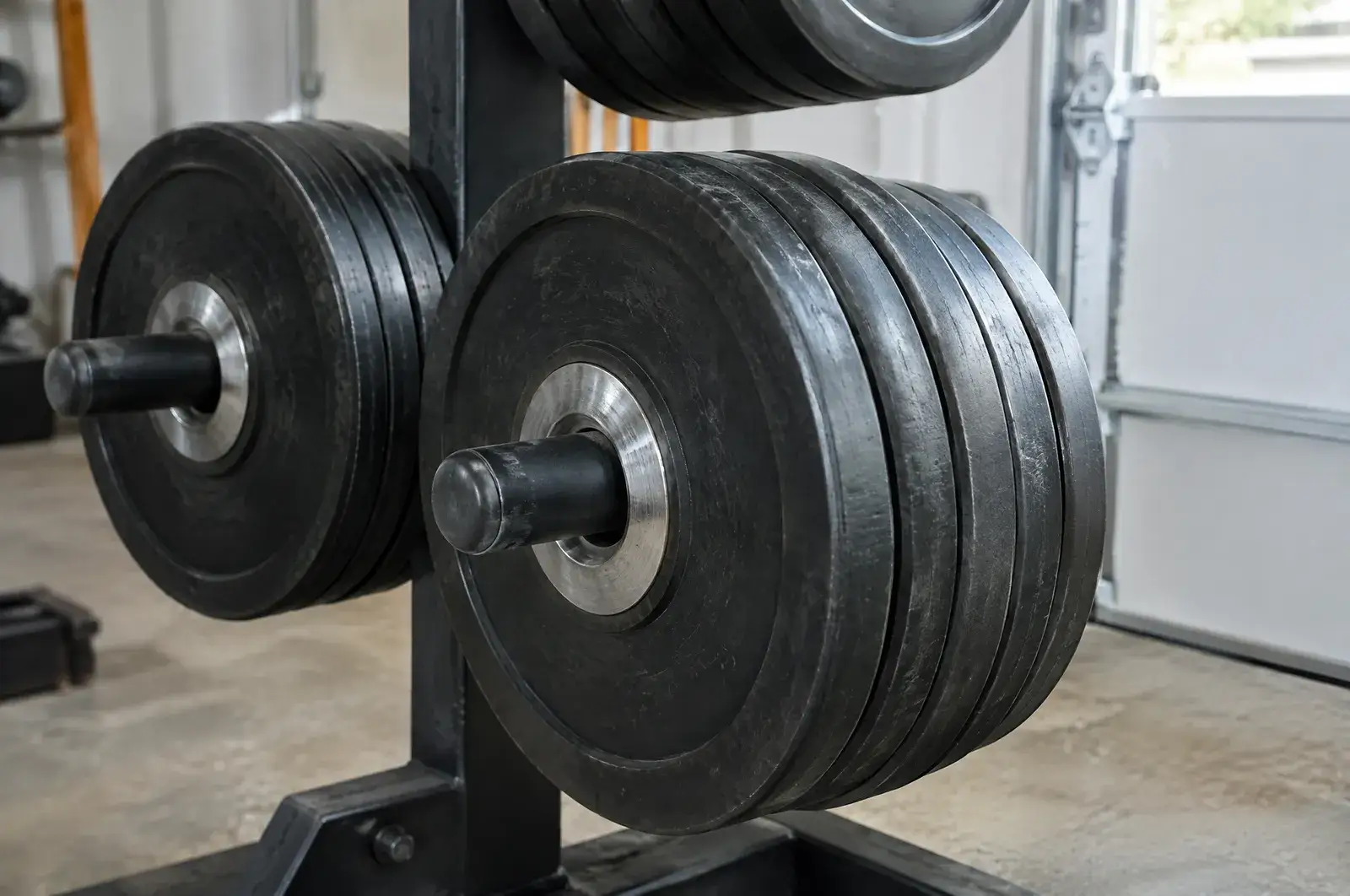
Bumper plates are bulkier than iron plates at the same weight because of the rubber shell, so they take up more rack or floor space per pound. A vertical plate tree or horizontal storage rack keeps sleeves from stacking directly on the floor, which protects both the plate rubber and your flooring. See our best storage for weight plates picks for rack styles sized to bumper vs. iron plate diameters.
This guide is based on maker specs, prices, and published info gathered from the sources listed below; see our how we research page for how we compile our product research. Prices and stock availability change, so confirm current numbers on the maker’s site before ordering.
Bottom line
2-inch olympic plates are defined by their 2 in sleeve bore, not by brand or color — that single spec determines what bar and collars they will fit. Bumper plates cost more per pound at small weights but protect floors during drops; cast iron plates run cheaper per pound in bulk sets but need controlled lowering. Match your collar to the 2 in sleeve, put at least 3/4 in rubber flooring under any drop zone, and buy your heaviest plates first to keep cost per pound down.
Questions
Do 2-inch olympic plates fit any barbell?
Only olympic barbells, which have 2 in diameter sleeves. Standard bars use 1 in plates and the two are not interchangeable without an adapter.
What is the difference between olympic and standard weight plates?
Olympic plates have a 2 in center hole for olympic barbell sleeves; standard plates have a 1 in hole for standard bars. Olympic plates are the norm for power racks, squat stands, and most home gym barbells sold today.
Are bumper plates or cast iron plates better for a home gym?
Bumper plates are rubber-coated and rated to be dropped, which protects floors and bars during deadlifts or olympic lifts. Cast iron plates are thinner per pound and often cheaper per pound, but should be lowered by hand, not dropped.
How thick should my gym floor be under 2-inch plates?
Greatmats lists 3/4 in rubber flooring as the bare minimum for proper floor protection under olympic lifting, per its published flooring-thickness guide. Thinner mats risk cracking under repeated plate drops.
What collar size works with 2-inch olympic plates?
Look for a collar sized for a 2 in barbell sleeve. Fringe Sport lists a 50.4mm collar opening on its Savage competition plates as fitting most olympic barbells.
How much does a set of 2-inch olympic plates cost?
Pricing varies by brand and material. On the maker sites checked 2026-09-23, RitFit 45lb bumper pairs run $219.99 and Fringe Sport 25lb Savage competition pairs run $189.00; Titan Fitness lists a full cast iron olympic set at $602.99.
Can I mix bumper and cast iron 2-inch plates on the same bar?
Yes, both share the same 2 in sleeve diameter, so they load onto the same olympic barbell. Many lifters use bumpers for the outer plates (to absorb drops) and iron plates for fine-tuning smaller increments.
Sources
Every fact on this page comes from the sources below. We did not test these products by hand.
- RitFit High-Grade Color Bumper Plates Olympic 2-Inch Rubber — RitFit, accessed
- Savage Weightlifting Competition Plates - lbs — Fringe Sport, accessed
- Cast Iron Olympic Plates — Titan Fitness, accessed
- Olympic Barbell Lock Collar Clips — Marcy, accessed
- What is the Best Thickness for Gym Flooring? — Greatmats, accessed
- Olympic Lifting Platforms — Katamu, accessed