
The short answer
Bumper plates are Olympic weight plates made of a steel or stainless steel insert covered in solid rubber, built so lifters can drop loaded barbells from overhead without damaging the floor, the bar, or the plate. They're standard for Olympic lifting, CrossFit, and any home gym where deadlifts or cleans get dropped.
On this page 12 sections
- The short answer
- What are bumper plates, exactly?
- What are bumper plates made of?
- How big are bumper plates and do they weigh what they say?
- Bumper plates vs. iron plates: what’s the real difference?
- How much do bumper plates cost?
- Do bumper plates need a warranty check before buying?
- What flooring do bumper plates need?
- How do you store bumper plates at home?
- Bottom line
- Questions
- Sources
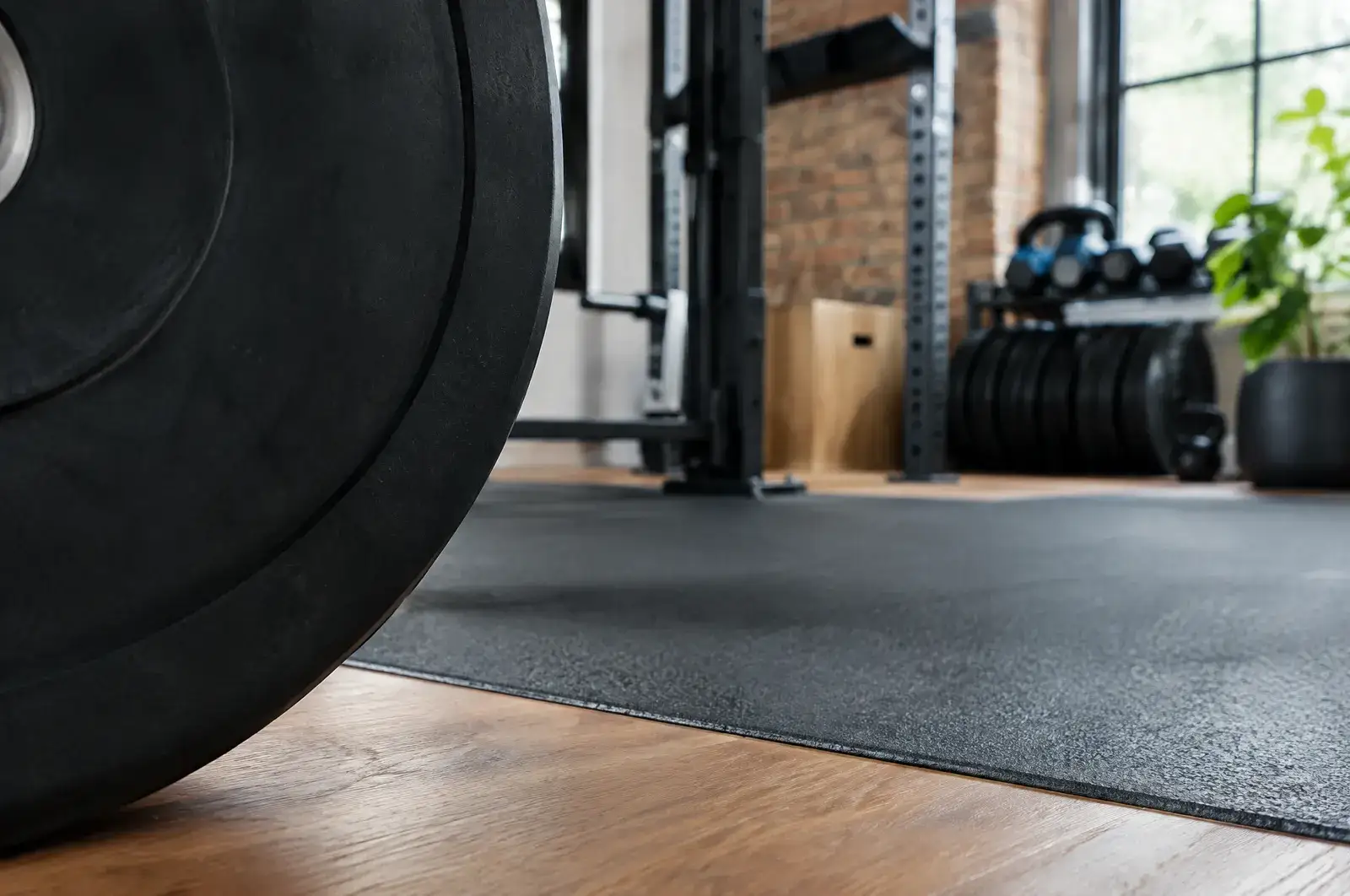
Bumper plates are Olympic weight plates with a steel or stainless steel insert bonded inside a molded rubber shell. The rubber absorbs the shock of a dropped bar, so the plate, the barbell sleeves, and the floor all take less damage than they would with solid cast iron. This article is based on maker specs, prices, and published product pages, not hands-on testing.
What are bumper plates, exactly?
A bumper plate is a two-inch (Olympic) weight plate built around a metal core covered entirely in rubber, instead of being solid metal like a traditional iron plate. The rubber shell lets lifters drop a loaded bar from the top of a clean, snatch, or deadlift without the plate cracking or gouging the floor.
Every bumper plate on the market follows the same basic structure: a metal hub or insert for weight and durability, sitting inside a rubber body that’s molded, not just coated on. Fringe Sport’s Savage Weightlifting Competition Plates use a 7.75-inch steel insert width specifically “to make drops a non-issue with max toughness,” per the maker’s product page.
What are bumper plates made of?
Bumper plates are made of a metal insert (steel or stainless steel) wrapped in solid rubber, usually virgin or recycled rubber compounds molded around the metal core. RXD’s Colored Premium Bumper Plates 2.0 use a stainless steel insert-to-rubber bond the maker markets as an upgrade over its base Black Premium line’s zinc-coated steel.
The rubber itself isn’t all the same density. Manufacturers rate rubber hardness with a Shore A durometer scale — higher numbers mean firmer rubber. Fringe Sport’s Savage line lists a 90 Shore A durometer rating, which the maker says gives the plates “a dead bounce” instead of an uncontrolled rebound. RXD rates its Colored Premium 10lb and 15lb plates at 92+ Shore A, calling them “more rigid, durable.”
Some lines deliberately vary rubber thickness by plate weight. RXD’s Colored Premium 2.0 makes its 10s and 15s thicker for durability and its 45s and 55s thinner — both land at 3.15 inches — “so you can fit more weight on the bar,” according to the product page.
How big are bumper plates and do they weigh what they say?
The Olympic competition standard is 450 mm in diameter, about 17.7 inches, regardless of the plate’s weight. Fringe Sport lists 450 mm ± 1 mm for its Savage Weightlifting Competition Plates, and RitFit lists a “uniform diameter of 17.7 inches” across its 2-inch bumper lines, so a 10lb bumper plate and a 55lb bumper plate take up the same footprint on the bar — only thickness changes.
Weight accuracy varies by grade. Fringe Sport’s Savage plates are “weighed and guaranteed accurate to +/- 1% of declared weight,” which is competition-grade tolerance. Gym-grade bumper lines generally don’t publish a tolerance figure, so if exact loading matters for coached Olympic lifting, check the spec sheet before buying — see our guide to calibrated weight plates for plates built around tighter tolerances.
Sleeve fit is a separate spec worth checking. Fringe Sport’s Savage plates have a 50.4 mm collar opening, which the maker says “fits most Olympic barbells.” RitFit’s bumper lines use a 2-inch sleeve, standard for any Olympic barbell.
Bumper plates vs. iron plates: what’s the real difference?
| Feature | Bumper plates | Cast iron plates |
|---|---|---|
| Drop-safe | Yes — rubber absorbs impact | No — can chip, crack, or gouge floors |
| Diameter | Fixed at 450mm (17.7 in) regardless of weight | Diameter shrinks with lighter plates |
| Noise on drop | Quieter — REP notes rubber “reduces ground pressure” (RitFit spec) | Loud metal-on-metal clang |
| Typical use | Olympic lifting, CrossFit, deadlifts done for reps | Powerlifting, slow controlled lifts |
| Price per lb (gym-grade example) | REP 45lb pair: $199.99 → $2.22/lb (our calculation) | Generally lower per pound, no rubber cost |
| Flooring needs | 9–12mm rubber flooring recommended for drops (REP) | Standard gym flooring usually sufficient |
If a lift ends with the bar coming off the floor fast or from overhead — cleans, snatches, deadlift-for-reps — bumper plates protect the equipment and the slab underneath. If lifts are slow and controlled, like most bench and squat work, cast iron costs less per pound and stores in a smaller stack for the same weight. See our best cast iron weight plates guide for that comparison in more detail.
How much do bumper plates cost?
Prices scale with rubber volume and grade. Here’s a snapshot of published gym-grade and competition-grade pricing per pair or set:
| Product | Weight | Price | Source |
|---|---|---|---|
| REP Black Bumper Plates | 10lb pair | $69.99 | REP Fitness |
| REP Black Bumper Plates | 25lb pair | $119.99 | REP Fitness |
| REP Black Bumper Plates | 45lb pair | $199.99 | REP Fitness |
| REP Black Bumper Plate Set | 160lb set | $359.99 | REP Fitness |
| REP Black Bumper Plate Set | 230lb set | $519.99 | REP Fitness |
| REP Competition Bumper Set (LB) | 210lb set | $692.99 | REP Fitness |
| Fringe Savage Competition (kg) | 10kg pair | $189.00 | Fringe Sport |
| Fringe Savage Competition (kg) | 15kg pair | $269.00 | Fringe Sport |
| Rogue Echo Bumper Set V2 | 160lb set (2 ea 10/25/45lb) | $363.00 | Rogue Fitness |
Prices change and availability shifts by size, so check the maker’s page before ordering. A 160lb bumper set works out to roughly $2.25 per pound at REP versus about $2.27 per pound at Rogue (our calculation from our product research prices above) — close enough that shipping cost and stock often decide the winner.
Metric (kg) sets tend to run for lifters training on international standards or competing under IWF rules, while pound (lb) sets suit lifters programming in 5s and 10s. REP’s Color Bumper Plates (KG) line prices a 5kg pair at $89.99 and a 25kg pair at $259.99, giving a full spread for anyone building a kilo-based training max.
Do bumper plates need a warranty check before buying?
Yes — warranty length on bumper plates often varies by plate weight within the same product line, not just by brand. REP Fitness backs its 10lb and 15lb Black Bumper Plates with a 6-month warranty, but the 25lb, 35lb, 45lb, and 55lb plates in the same line get a 3-year warranty for home use, per REP’s product page.
RXD’s Colored Premium 2.0 line splits warranty coverage the same way: 90 days on the 10s and 15s, but 3 years on the 25s, 35s, 45s, and 55s. Heavier plates generally see more coverage because they’re built with thicker rubber and take fewer total drops per pound of training volume — read the fine print on plate weight, not just the headline “warranty” claim on the listing.
What flooring do bumper plates need?
Bumper plates still need real impact-rated flooring underneath, since rubber-on-rubber drops transmit force into the slab. REP Fitness’s flooring guide breaks it down by thickness: 8mm rolls suit lifters who don’t plan on dropping weights at all, 9mm is “a great option for people who may just be dropping bumper plates,” and 12mm “offers the most protection for your floor and can withstand bumper plates and irons plates” — REP calls 12mm ideal for Olympic weightlifting specifically.
For apartment or upstairs gyms, adding dedicated drop pads or crash pads on top of rolled flooring gives extra insurance. REP confirms its crash pads “can be used with both iron and bumper plates,” so a mixed home gym setup doesn’t need two separate protection systems. See our best gym flooring guide for platform-level options.
How do you store bumper plates at home?
Bumper plates’ fixed 17.7-inch diameter makes them stack differently than iron plates of the same weight, since a 10lb bumper takes up the same rack space as a 45lb bumper. A vertical weight tree or wall-mounted rack sized for full-diameter Olympic plates keeps a bumper set organized without plates leaning or rolling — see our best storage for weight plates guide for rack options built around that constraint.
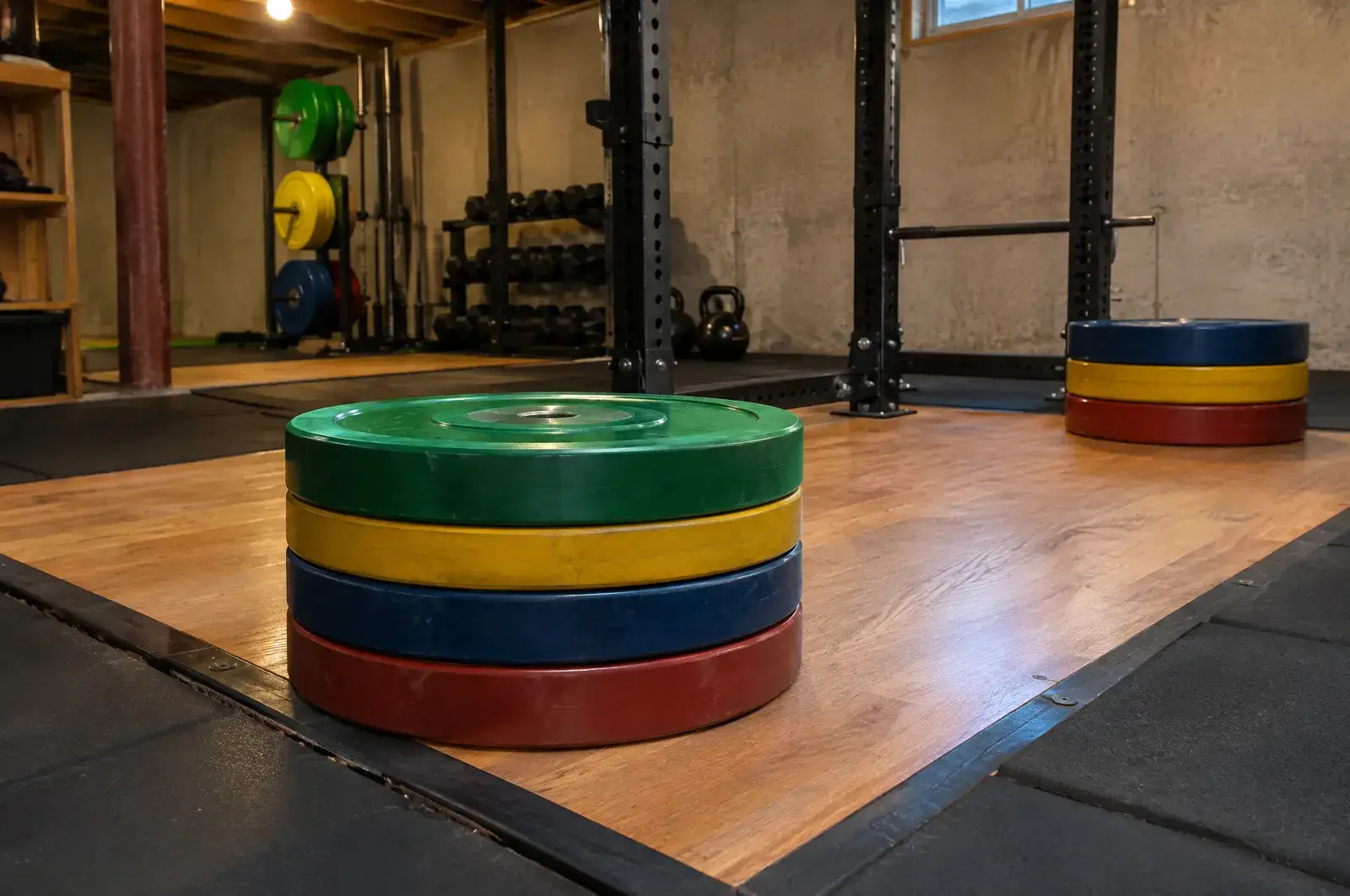
Color coding also helps at a glance when plates are stored in mixed sets. Fringe Sport notes its Savage line uses “color-coded plates to easily differentiate weights,” which speeds up loading a bar to a specific number without reading each plate’s stamped weight.
Bottom line
Bumper plates are rubber-covered Olympic plates built to survive being dropped, made of a steel or stainless steel insert inside a molded rubber shell, standardized at 450mm (17.7 in) diameter regardless of weight. They cost more per pound than cast iron — a 160lb bumper set runs $359.99 to $363.00 across the brands in this guide — but they’re the right call for anyone doing Olympic lifts, CrossFit-style training, or deadlifts for reps where the bar comes off the floor fast. Match plate grade to use: gym-grade bumpers for general dropping, competition-grade (like Fringe Sport’s ±1% accuracy plates) for anyone training to a coached standard. For general background on plate types before buying, see our barbells and plates hub, and check our how-we-research page for how these facts were sourced.
Questions
Are bumper plates worth it for a home gym?
If you drop bars from the hang, do cleans, snatches, or heavy deadlifts, yes — bumper plates protect the floor and the bar's bearings. If you only do slow bench, squat, and controlled deadlifts, cast iron plates cost less and take up less space for the same weight, per REP Fitness and Fringe Sport product pages.
What are bumper plates made of?
A steel or stainless steel hub or insert wrapped in molded rubber. RXD's Colored Premium 2.0 line, for example, uses a stainless steel insert bonded to rubber, while Fringe Sport's Savage plates use a 7.75-inch steel insert inside the rubber body.
Do bumper plates weigh exactly what's printed on them?
Competition-grade bumpers are held to tighter tolerances than gym-grade ones. Fringe Sport's Savage Weightlifting Competition Plates are guaranteed accurate to within 1% of declared weight, per the maker's product page.
What's the standard diameter of a bumper plate?
45 cm (about 17.7 inches) is the IWF competition standard. Fringe Sport lists 450 mm ± 1 mm for its Savage plates, and RitFit lists 17.7 inches across its bumper plate lines.
Can I mix bumper plates and iron plates on the same bar?
Yes, many lifters load bumpers on the outside for drop protection and iron plates closer to the sleeve for fine loading. REP Fitness's drop pads and crash pads are rated for use with both plate types.
What flooring do I need under bumper plates?
REP Fitness recommends at least 9mm rubber flooring for occasional bumper plate drops, and 12mm rolls where bumpers get dropped regularly, since 12mm 'can withstand bumper plates and iron plates' according to REP's flooring product page.
How long do bumper plates last / what warranty do they carry?
Warranty length varies by plate size at some brands. REP Fitness backs its 10 and 15lb Black Bumper Plates with a 6-month warranty and its 25 to 55lb Black Bumper Plates with a 3-year warranty for home use, per REP's product page.
Sources
Every fact on this page comes from the sources below. We did not test these products by hand.
- Bar + Black Bumper Plate Packages — Fringe Sport, accessed
- Savage Weightlifting Competition Plates - kgs — Fringe Sport, accessed
- Savage Weightlifting Competition Plates - lbs — Fringe Sport, accessed
- Black Bumper Plate Pairs — REP Fitness, accessed
- Black Bumper Plate Sets — REP Fitness, accessed
- Competition Bumper Plate Sets (LB) — REP Fitness, accessed
- Color Bumper Plates (KG) — REP Fitness, accessed
- Commercial Flooring Rolls — REP Fitness, accessed
- Drop Pads — REP Fitness, accessed
- Colored Premium Bumper Plates 2.0 — RXD, accessed
- RitFit High-Grade Color Bumper Plates — RitFit, accessed
- Rogue Echo Bumper Plates — Rogue Fitness, accessed