
The short answer
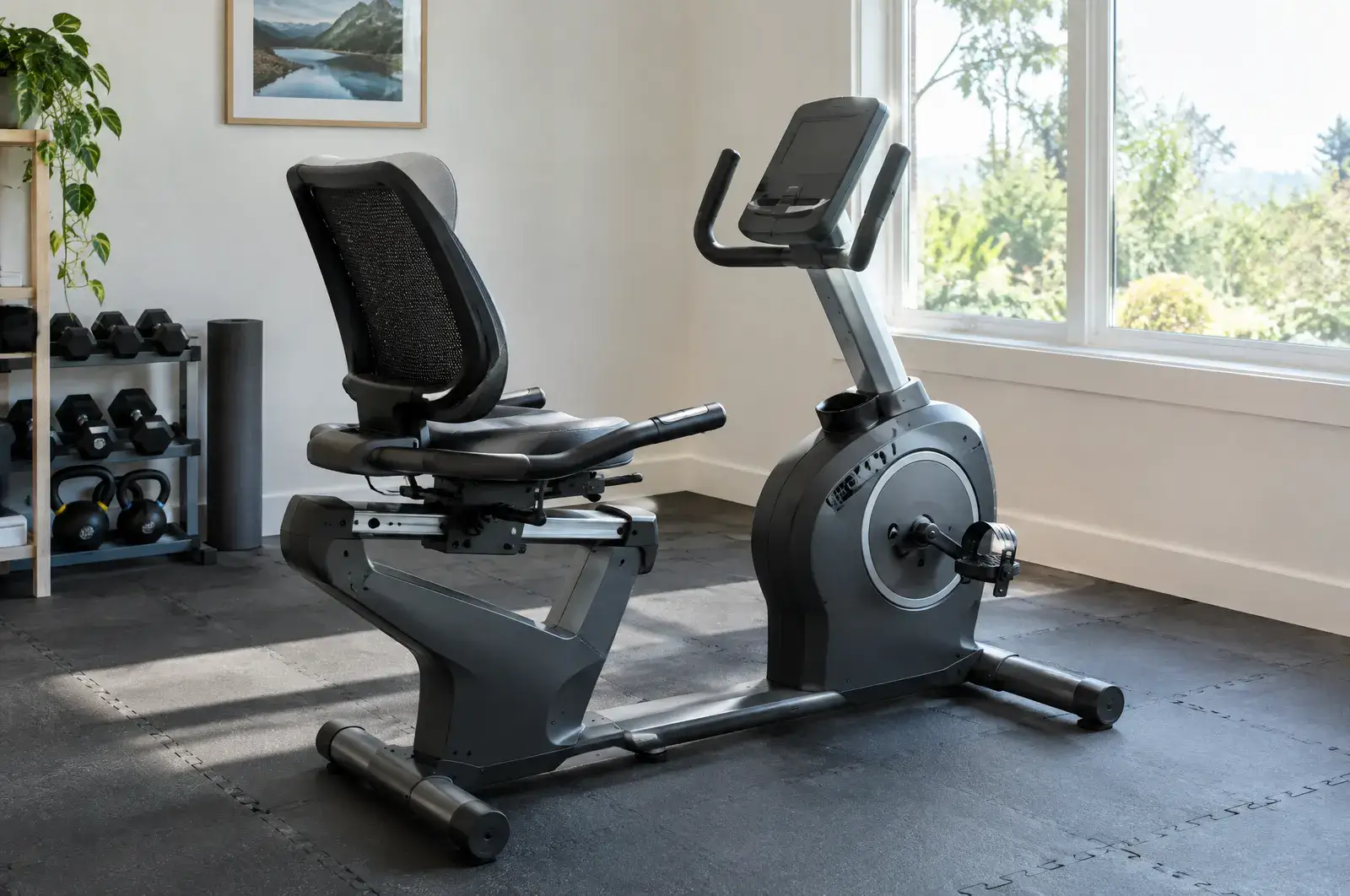
A recumbent bike is a stationary exercise bike with a reclined, chair-style seat and pedals positioned out in front of the body instead of underneath it. The backrest supports the lower back, and most models use magnetic resistance with preset levels. This layout takes pressure off the spine, hips, and wrists, making recumbent bikes a common pick for low-impact cardio, rehab, and longer seated workouts.
On this page 13 sections
- The short answer
- What is a recumbent bike?
- How is a recumbent bike different from an upright bike?
- What are the main parts of a recumbent bike?
- What is a recumbent bike good for?
- What is a dual-action recumbent bike?
- How much does a recumbent bike cost?
- What specs matter when comparing recumbent bikes?
- How do you set up a recumbent bike at home?
- How does a recumbent bike compare with other cardio machines?
- Bottom line
- Questions
- Sources
What is a recumbent bike?
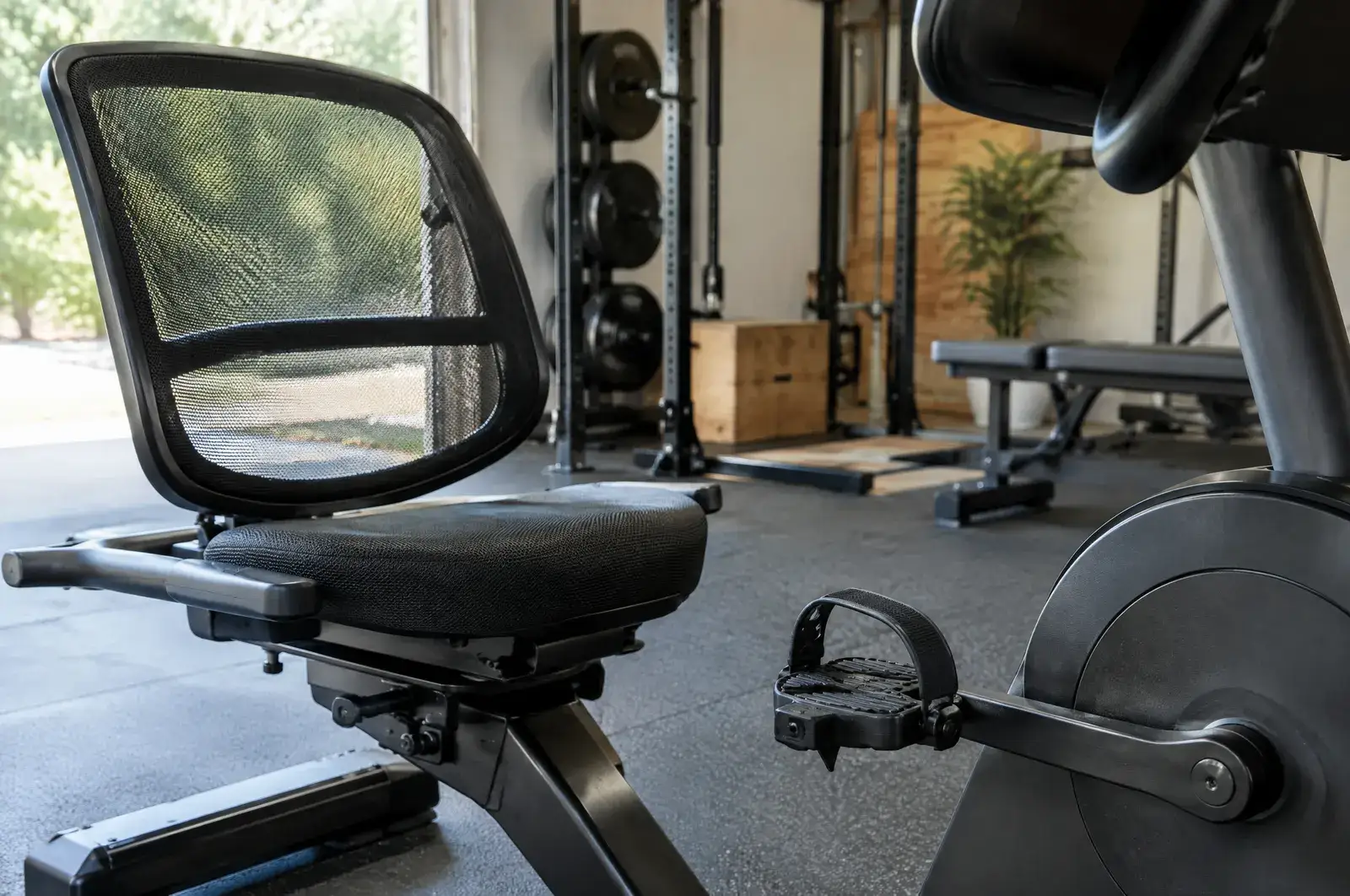
A recumbent bike is a stationary exercise bike where the rider sits in a reclined, chair-style seat with a backrest, and the pedals sit out in front of the body instead of directly underneath it. This shifts body weight onto the seat and backrest rather than the wrists and lower spine. Most models use magnetic resistance with a set number of preset levels, adjustable seating for different leg lengths, and a stationary frame that does not move during pedaling.
This article is based on maker specs, prices, and published product pages, not hands-on testing.
How is a recumbent bike different from an upright bike?
The core difference is body position, not the pedaling motion. On an upright bike, the rider sits directly over the pedals in a posture closer to a road bike. On a recumbent bike, the rider leans back into a padded seat with a backrest, and the pedals are positioned forward.
That forward pedal position and back support change where the load lands on the body. The seat and backrest carry more of the rider’s weight, so the lower back, hips, and wrists take less pressure than on an upright bike. This is why recumbent bikes show up often in rehab settings, physical therapy clinics, and home gyms for riders managing joint pain or lower-back issues.
What are the main parts of a recumbent bike?
Based on the Marcy models in our product research, a typical recumbent bike has six core parts: frame, seat, pedals, resistance system, handlebars, and (on some models) a display.
- Frame: Steel tubing construction. The Marcy NS-1201R uses 1” x 2” rectangle and 2” round, 14-gauge steel tubing with a molded ABS shroud and powder coat finish.
- Seat: Padded and adjustable to fit different leg lengths. The NS-1201R uses high-density foam with durable vinyl covering; the NS-40502R adds a backpad; the JX-7301 has a high-density foam padded seat and back pad.
- Pedals: Weighted and counterbalanced, with adjustable straps. The NS-1201R lists this feature specifically for easy on/off use.
- Resistance system: Magnetic resistance with preset levels. The NS-1201R has 8 preset manual magnetic resistance levels aimed at cardiovascular endurance and weight loss.
- Handlebars: Contoured with foam covers on the NS-1201R for comfort during longer sessions; ergonomic steel handles on the NS-40502R.
- Display: Not standard across all models. The NS-40502R and JX-7301 both include an LCD monitor to track workout data; the base NS-1201R our product research does not list one.
What is a recumbent bike good for?
A recumbent bike is built for low-impact, seated cardio where joint stress needs to stay low. The reclined seat and backrest support the lower back, and the front-pedal position takes weight off the wrists and hips compared with standing or upright cardio machines.
That combination makes recumbent bikes a fit for riders recovering from injury, managing chronic back or knee pain, or anyone who wants a longer cardio session without the joint load of running or an upright bike. The adjustable seat on models like the NS-1201R also lets it fit a range of leg lengths, and the 300-lb max user weight on the Marcy models gives it usable capacity for most home gym users.
What is a dual-action recumbent bike?
A dual-action recumbent bike adds moving handlebars so the arms work at the same time as the legs. The Marcy JX-7301 is a fact-sheet example: it has handlebars that move back and forth, similar to an elliptical, so pedaling and pushing the arm exercisers together increases how many calories a ride burns compared with legs-only pedaling.
This turns a normal recumbent bike into a fuller-body cardio tool without leaving the seated, low-impact position. The JX-7301 keeps the same high-density foam padded seat and back pad as other Marcy recumbent models, plus a water bottle holder below its LCD monitor.
How much does a recumbent bike cost?
Home consumer recumbent bikes and commercial-grade units sit in very different price ranges. The table below lists every model with a price in our product research.
| Model | Maker | Price | Where |
|---|---|---|---|
| Marcy NS-1201R | Marcy | $299.99 | Marcy site |
| Marcy NS-40502R | Marcy | $299.99 | Marcy site |
| Marcy JX-7301 (dual action) | Marcy | $349.99 | Marcy site |
| Intenza 450 i2 | REP Fitness | $5,500.00 | REP Fitness site |
| Intenza 450 i2S | REP Fitness | $4,400.00 | REP Fitness site |
| Intenza 550 e2+ | REP Fitness | $7,825.00 | REP Fitness site |
Prices change, so check the maker or retailer page before buying. The gap between the Marcy line and the Intenza line is roughly $4,050 to $7,525 (our calculation), which reflects a jump from home consumer bikes to commercial-grade equipment aimed at gyms and studios. Our product research does not list detailed specs for the Intenza models beyond price, so that gap is about price tier only, not a feature-by-feature comparison.
What specs matter when comparing recumbent bikes?
Three specs from our product research are worth comparing directly: footprint, weight capacity, and resistance levels.
| Spec | Marcy NS-1201R | Marcy NS-40502R | Marcy JX-7301 |
|---|---|---|---|
| Assembled dimensions | 52.5”L x 25”W x 46.5”H | 56”L x 25”W x 44”H | Not listed |
| Max user weight | 300 lbs | 300 lbs | 300 lbs |
| Resistance levels | 8 preset magnetic | Not listed | Not listed |
| Display | Not listed | LCD monitor | LCD monitor |
| Price | $299.99 | $299.99 | $349.99 |
If floor space is tight, the NS-1201R has a slightly smaller footprint (52.5”L x 25”W) than the NS-40502R (56”L x 25”W). If tracking workout data matters, the NS-40502R or JX-7301 fits better since both list an LCD monitor and the base NS-1201R does not.
How do you set up a recumbent bike at home?
Setup starts with floor space and flooring, not the bike itself. Measure your space against the assembled dimensions of the model you’re considering — the NS-1201R needs roughly 52.5” x 25” of floor footprint, and the NS-40502R needs about 56” x 25”. Check out our guide on /best-gym-flooring/ if you’re placing the bike on a hard surface and want to protect it or reduce noise.
Once the bike is in place, adjust the seat to match leg length before the first ride. The Marcy models let you slide the seat forward or back to set stride length, and a seat set too far forward or back forces the knees to overextend or stay too bent through each pedal stroke. Set resistance to a low preset level for the first few rides, then increase gradually as fitness improves.
How does a recumbent bike compare with other cardio machines?
Recumbent bikes trade some calorie-burn intensity for comfort and joint protection. An air bike, by contrast, uses a fan-based resistance system that scales with effort and tends to push heart rate higher faster — see our guide on /what-is-an-air-bike/ for how that resistance system works and how it compares to magnetic resistance. If you’re deciding between a recumbent bike and other cardio equipment for a full setup, our /bikes/ hub and /best-home-gym-equipment/ guide cover more machine types side by side.
For a home gym built around strength plus cardio, a recumbent bike pairs well with a rack-based setup. See /best-power-racks/ if strength training is part of the plan, or /best-home-gyms/ for combined strength-and-cardio equipment picks.
Bottom line
A recumbent bike is a seated, reclined stationary bike with pedals out front and a backrest that reduces load on the spine, hips, and wrists. Home consumer models like the Marcy NS-1201R, NS-40502R, and JX-7301 run $299.99 to $349.99 and share a 300-lb max user weight, while commercial-grade Intenza models at REP Fitness run $4,400 to $7,825 for gym-level durability. Pick based on floor space, whether you want an LCD display, and whether dual-action arm handles matter for your workout.
This article follows our standard research process — see /how-we-research/ for how we source and verify specs and prices.
Questions
What is a recumbent bike good for?
Low-impact cardio, joint-friendly workouts, and rehab settings where a rider needs back support. The reclined seat and front-mounted pedals reduce strain on the lower back, hips, knees, and wrists compared with upright bikes.
What is a recumbent stationary bike?
Same thing as a recumbent exercise bike — a stationary cardio machine with a reclined, chair-style seat and pedals out front instead of underneath the rider. It stays in one place and typically uses magnetic resistance.
Is a recumbent bike as good as an upright bike for cardio?
Our product research does not compare calorie burn between bike types. Both use magnetic resistance to raise heart rate; the main difference is body position and joint load, not the cardio mechanism itself.
How much weight can a recumbent bike hold?
It varies by model. The Marcy NS-1201R, Marcy NS-40502R, and Marcy JX-7301 all list a 300-lb maximum user weight on the maker's site.
Do recumbent bikes have a display?
Some do. The Marcy NS-40502R includes an LCD monitor to track workout stats, and the Marcy JX-7301 has an LCD monitor plus a water bottle holder built in.
Can a recumbent bike work my arms too?
Most recumbent bikes only work the legs, but some dual-action models add moving handlebars. The Marcy JX-7301 has arm exercisers that move back and forth like an elliptical while you pedal.
How much does a recumbent bike cost?
Home consumer models from Marcy list between $299.99 and $349.99 on the maker's site. Commercial-grade Intenza recumbent bikes at REP Fitness range from $4,400 to $7,825, reflecting a big jump in build quality and electronics.
Sources
Every fact on this page comes from the sources below. We did not test these products by hand.
- Marcy Recumbent Exercise Bike NS-1201R — Marcy, accessed
- Marcy Recumbent Bike NS-40502R — Marcy, accessed
- Marcy Pro Body Cycle Dual Action Recumbent Exercise Bike JX-7301 — Marcy, accessed
- Intenza 550 e2+ Recumbent Bike — REP Fitness, accessed
- Intenza 450 i2S Recumbent Bike — REP Fitness, accessed
- Intenza 450 i2 Recumbent Bike — REP Fitness, accessed