
The short answer
Bumper plates start as virgin or crumb rubber compound, mixed to a target durometer, then molded around a steel or brass center insert sized to fit an Olympic barbell sleeve. Makers vary thickness and diameter by weight to control bounce and durability, then weigh-check each plate to a tolerance (often ±1%) before packaging it with a warranty.
On this page 15 sections
- The short answer
- Step by step
- What are bumper plates made of?
- How are bumper plates made, step by step?
- Why does thickness change by weight?
- Why do the smallest plates get reinforced the most?
- How is the center insert made and fitted?
- How accurate is bumper plate weight, and what does calibration mean?
- How does price scale with plate weight?
- What warranty should you expect on a bumper plate?
- What floor protection do bumper plates need?
- How should you store bumper plates once you own them?
- Bottom line
- Questions
- Sources
Step by step
Pick the rubber source
Makers start with either virgin rubber or crumb (recycled) rubber. Fringe Sport uses 100% premium virgin rubber on its Savage line for a low, dead bounce and says virgin rubber will not smell like recycled rubber does. Titan Fitness sells crumb rubber plates, an approach that reuses reclaimed rubber and tends to cost less per plate.
Mix the compound to a target durometer
Durometer measures rubber hardness, and plate makers tune it by weight class. Fringe Sport's Black Bumper Plate Sets list a durometer of 90 sHA on the 10 and 15 lb plates and 85 sHA on the 25, 35, 45, and 55 lb plates, a softer mix on the heavier plates that see more repeated floor impact.
Engineer diameter and thickness per weight
Diameter and thickness are set per weight, not fixed across the line. Fringe Sport lists an IWF standard 450mm (about 17.7 in) diameter on its 15 to 55 lb plates and 445mm (17.5 in) on its 10 lb plate, with widths ranging from 1.05 in on the 10 lb plate up to 3.25 in on the 55 lb plate. Titan's single-plate line follows a similar pattern: the 45 lb plate is 445mm across and 2.4 in thick, while the 35 lb plate is the same diameter but 3.1 in thick.
Reinforce the light plates on purpose
Small plates take the hardest hits relative to their mass, so makers over-engineer them. Fringe Sport says its 10 lb Smart Design uses a thicker width to dissipate shock on impact and a narrower diameter to offset that impact, specifically to resist destruction on lighter plates that get dropped often during technique work.
Mold the rubber around the center bore
The rubber is molded so the finished plate has a center bore sized for a barbell sleeve. Fringe Sport lists a 50.4mm insert diameter on its Black Bumper Plate Sets, built to fit most barbells with 2 in sleeves; that bore has to stay consistent across the mold run so plates slide on and off the bar without binding.
Fit and bond the steel or brass insert
A bumper plate is rubber almost all the way through, but the center collar is metal. Fringe Sport describes a custom 2 in hooked steel ring added to the middle of each Savage plate to give a solid, secure fit on the barbell and resist wear over time; the broader category definition notes this collar can be steel or brass depending on the maker.
Weigh and calibrate each plate
Once cured, plates get checked against a declared weight and tolerance band. Fringe Sport's Black Bumper Plate Sets list a weight tolerance of plus or minus 1% of declared weight — tight enough for most home training but looser than true calibrated plates used for meet prep.
Back the plate with a warranty and ship
Warranty terms close out the process and usually scale with plate weight, same as thickness does. REP Fitness backs its 10 and 15 lb black bumper plates with a 6-month warranty and its 25 to 55 lb plates with a 3-year warranty; Fringe Sport's Black Bumper Plate Sets carry a 3-year warranty on the 25 to 55 lb plates and a 1-year warranty on the 10 and 15 lb plates, both covering commercial use.
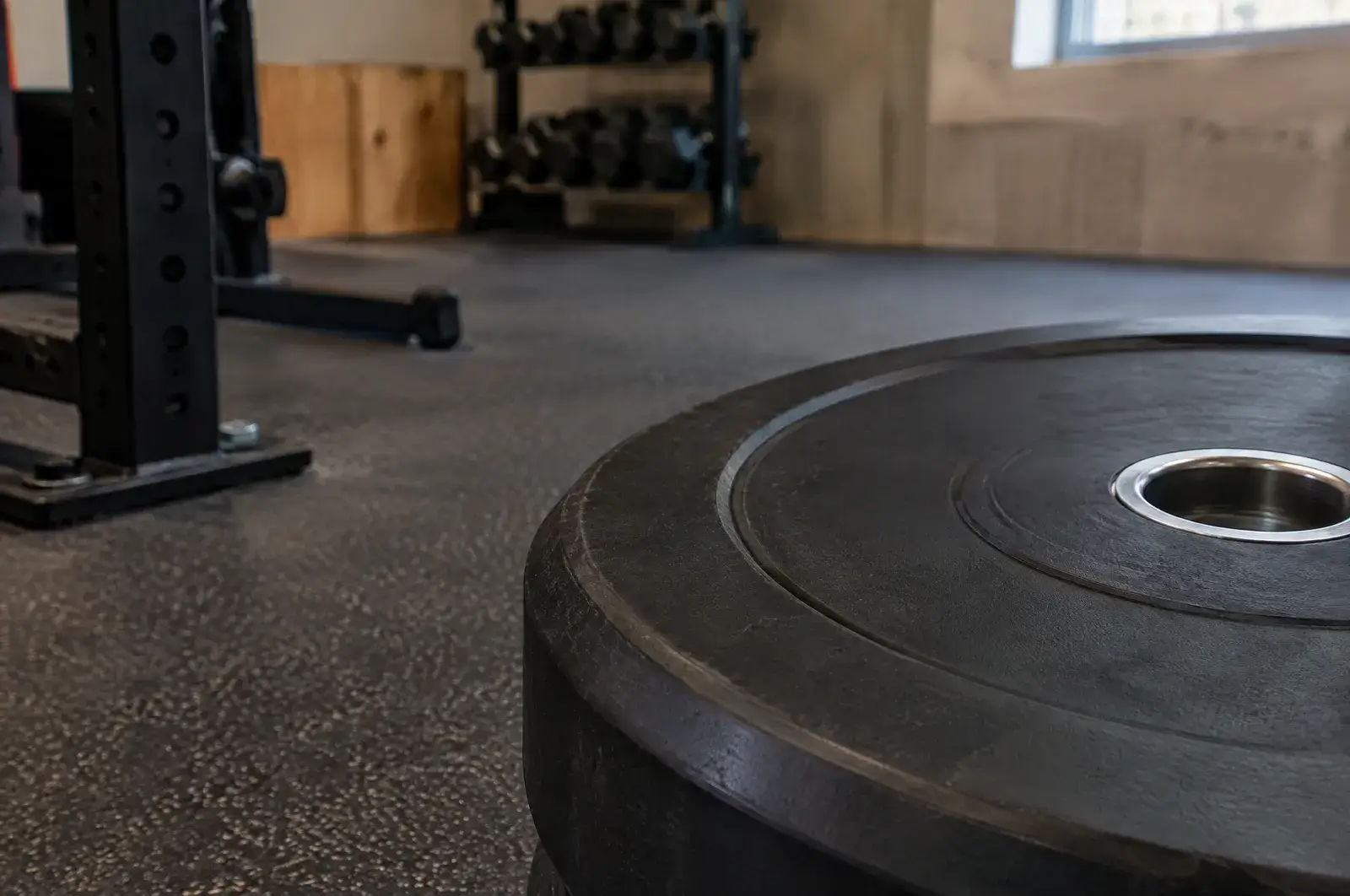
Bumper plates are not stamped out of a single mold in one size. Makers vary rubber type, durometer, diameter, and thickness by weight class, then bond in a steel or brass center insert before weighing and warrantying each plate. This guide walks through that build process using specs and warranty terms published by Titan Fitness, Fringe Sport, and REP Fitness, plus what those choices mean for your floor and your wallet. This article is based on maker specs, prices, and published information, not hands-on testing.
What are bumper plates made of?
A bumper plate is a weight plate for Olympic barbells made almost entirely of rubber, with a steel or brass collar in the center that accepts the bar sleeve. That two-part build — rubber body plus metal insert — is what lets the plate absorb a drop without cracking a floor or a plate at the same time.
The rubber itself is not one fixed formula. Titan Fitness sells crumb rubber plates, built from reclaimed rubber material, while Fringe Sport’s Savage line uses 100% premium virgin rubber and specifically calls out that virgin rubber will not smell like recycled rubber does. Crumb rubber tends to cost less; virgin rubber tends to be marketed on bounce control and smell.
How are bumper plates made, step by step?
The eight steps below follow the build order implied by the specs makers publish: rubber sourcing, compound mixing, mold engineering, insert bonding, weight calibration, and warranty. See the numbered steps list at the top of this article for the full walkthrough with source figures for each stage.
Two stages matter most for a home gym buyer: how the rubber compound is tuned (durometer), and how diameter and thickness scale by weight. Those two choices decide how a plate bounces, how it sounds on a hit, and how long the outer rubber lasts under repeated drops.
Why does thickness change by weight?
Thicker rubber on heavier plates spreads impact energy over more material, which is why plates get both wider in diameter and thicker as the declared weight goes up. Fringe Sport’s published widths make the scaling clear across a full weight run.
| Plate weight (lb) | Width (in) | Durometer (sHA) |
|---|---|---|
| 10 | 1.05 | 90 |
| 15 | 1.2 | 90 |
| 25 | 1.87 | 85 |
| 35 | 2.35 | 85 |
| 45 | 2.9 | 85 |
| 55 | 3.25 | 85 |
Source: Fringe Sport, Black Bumper Plate Sets.
Notice the durometer drops from 90 sHA on the two lightest plates to 85 sHA on everything 25 lb and up — a softer, slightly more absorbent compound on the plates that carry more total load. Titan’s single-plate line shows the same weight-to-thickness relationship from a second maker: the 35 lb plate measures 3.1 in thick versus 2.4 in on the 45 lb plate, both at the same 445mm (17.5 in) diameter, which tells you thickness and diameter don’t move in lockstep — makers tune each dimension separately per weight.
Why do the smallest plates get reinforced the most?
Light plates absorb more punishment per pound than heavy plates because lifters drop them constantly during technique and warm-up work. Fringe Sport addresses this directly: its 10 lb Smart Design uses a thicker width to dissipate shock on impact and a narrower diameter to offset that impact, a deliberate trade meant to resist destruction on the plate most likely to hit the floor over and over.
That detail matters when you’re building a starter set. If you’re doing high-rep technique work with 10s and 15s, a plate engineered for repeated drops will outlast a generic thin bumper even if the sticker price is close. Pair that plate choice with adequate floor protection — see the flooring section below — since the plate and the floor share the impact load either way.
How is the center insert made and fitted?
The insert is the metal core that turns a rubber disc into a barbell plate. Fringe Sport’s Savage line uses a custom 2 in hooked steel ring bonded into the middle of each plate to give a solid, secure fit on the barbell sleeve and resist wear over time, and the category-level description confirms this collar is commonly steel or brass depending on the maker.
Insert diameter also has to match standard barbell sleeves. Fringe Sport lists a 50.4mm insert diameter on its Black Bumper Plate Sets, sized to fit most barbells with 2 in sleeves — the same sleeve diameter used on a standard Olympic barbell. If you’re shopping plates for a barbell you already own, confirm the sleeve diameter matches before ordering.
How accurate is bumper plate weight, and what does calibration mean?
Standard bumper plates carry a tolerance band, not an exact weight guarantee. Fringe Sport’s Black Bumper Plate Sets list a weight tolerance of plus or minus 1% of declared weight, which is tight enough for general strength training but not tight enough for meet-level plate math.
On our calculation, a plus-or-minus-1% band on a 45 lb plate works out to roughly 0.45 lb of possible variance per plate — small on its own, but it compounds if you’re stacking several plates per side and need exact totals, like when you’re checking how much weight is 4 45s a side. If exact per-plate weight matters for competition prep, look at calibrated weight plates instead, which are built and checked to a tighter standard than training bumpers.
How does price scale with plate weight?
Larger plates use more rubber and a bigger insert, so price rises with weight — but not always at the same rate per pound across brands. The table below lines up single-plate and pair pricing from two makers.
| Product | Weight | Price | Price per lb (our calculation) |
|---|---|---|---|
| Titan Fitness single crumb rubber plate | 45 lb | $94.97 | $2.11/lb |
| Titan Fitness single crumb rubber plate | 35 lb | $69.97 | $2.00/lb |
| REP Fitness black bumper plate pair | 45 lb pair (90 lb total) | $199.99 | $2.22/lb |
| REP Fitness black bumper plate pair | 25 lb pair (50 lb total) | $119.99* | $2.40/lb |
*REP pair pricing for 10/15/25/35/45 lb runs $69.99/$79.99/$119.99/$159.99/$199.99 per pair.
Titan’s crumb rubber single plates land slightly cheaper per pound than REP’s black bumper pairs in this comparison, though the two products differ in rubber type and are sold in different formats (single plate versus pair). Compare per-pound cost against warranty length, not price alone — a cheaper plate with a shorter warranty can cost more over years of use.
What warranty should you expect on a bumper plate?
Warranty length typically tracks plate weight the same way thickness does, with lighter plates getting shorter coverage. REP Fitness backs its 10 and 15 lb black bumper plates with a 6-month warranty and its 25, 35, 45, and 55 lb plates with a 3-year warranty for home use.
Fringe Sport follows a similar split on its Black Bumper Plate Sets: a 3-year warranty on the 25, 35, 45, and 55 lb plates, and a 1-year warranty on the 10 and 15 lb plates, with both terms including commercial use coverage. If you’re buying a mixed set for a shared or semi-commercial home gym, check whether the seller’s warranty actually covers commercial-style use before you count on it.
What floor protection do bumper plates need?
Bumper plates are built to be dropped, but your floor still needs matching protection, and the right thickness depends on what you’re dropping. REP Fitness describes a 9mm flooring roll as a good option for people who may just be dropping bumper plates, and a 12mm roll as offering the most protection, able to withstand both bumper plates and iron plates — the choice you’d want if you also use cast iron weight plates on the same platform.
If you mix plate types on the same rack or platform, confirm your pad or flooring is rated for both. REP Fitness confirms its drop pads work with both iron and bumper plates, which is the kind of spec worth checking before combining equipment types. Full flooring options, including roll and tile choices by thickness, are covered in the best gym flooring guide.
How should you store bumper plates once you own them?
Bumper plates take up more floor space than iron plates of the same weight because of their larger diameter and thickness, so storage planning matters more with a bumper set. A dedicated plate rack or wall-mounted storage keeps plates upright and off the floor, which protects both the rubber edge and your walking space around a power rack or barbell setup — see best storage for weight plates for layout options.
If you’re comparing bumper plates against standard barbell weight plates made of iron for a first purchase, weigh the trade: bumpers cost more per pound on average but protect floors and barbells on drops, while iron plates are denser and take up less rack space per pound. For more on how this site checks maker specs and pricing before publishing, see how we research.
Bottom line
Bumper plates go through a deliberate build process: rubber sourcing, durometer tuning by weight class, diameter and thickness engineering, insert bonding, weight-tolerance checks, and a warranty tied to plate weight. Titan, Fringe Sport, and REP each publish slightly different specs and warranty terms, so check thickness, durometer, tolerance, and warranty length side by side rather than shopping on price alone — prices and specs on maker sites change, so confirm current figures before you buy.
Questions
What are bumper plates made of?
Fringe Sport describes a bumper plate as a weight plate for Olympic bars made almost entirely of rubber, with a steel or brass collar in the middle that accepts the bar sleeve. Some makers use virgin rubber, others use crumb (recycled) rubber, which changes smell, density, and price.
What is the difference between virgin rubber and crumb rubber bumper plates?
Virgin rubber is new rubber compound; Fringe Sport says its virgin-rubber Savage plates give a low, dead bounce and note that virgin rubber will not smell like recycled rubber does. Titan Fitness sells crumb rubber plates, which use reclaimed rubber and typically cost less.
How thick are bumper plates?
Thickness scales with weight. Fringe Sport's Black Bumper Plate Sets list 1.05 in for 10 lb plates up to 3.25 in for 55 lb plates, while Titan's 45 lb single plate measures 2.4 in thick and its 35 lb plate measures 3.1 in thick.
How accurate is the weight on a bumper plate?
Fringe Sport's Black Bumper Plate Sets list a weight tolerance of plus or minus 1% of the declared weight. For a true competition-grade tolerance, look at calibrated plates instead of standard training bumpers.
Do bumper plates come with a warranty?
Warranties vary by weight and brand. REP Fitness backs its 10 and 15 lb black bumper plates with a 6-month warranty and its 25 to 55 lb plates with a 3-year warranty; Fringe Sport backs its 25 to 55 lb Black Bumper Plate Sets with a 3-year warranty and its 10 and 15 lb plates with a 1-year warranty.
What floor should I put under bumper plates?
REP Fitness describes a 9mm flooring roll as a good option for people who may just be dropping bumper plates, and a 12mm roll as offering the most protection, able to withstand both bumper plates and iron plates. Heavier lifters or Olympic lifting platforms should lean toward the thicker option.
Can bumper plates be used with iron plates on the same equipment?
REP Fitness says yes for its drop pads, confirming its crash pads work with both iron and bumper plates. Check any specific pad or platform listing before mixing plate types on it.
Sources
Every fact on this page comes from the sources below. We did not test these products by hand.
- 45 LB Single Crumb Rubber Bumper Plate — Titan Fitness, accessed
- 35 LB Single Crumb Rubber Bumper Plate — Titan Fitness, accessed
- 25 LB Pair Crumb Rubber Bumper Plates — Titan Fitness, accessed
- Black Bumper Plate Sets — Fringe Sport, accessed
- Savage Bumper Plate (Pairs) — Fringe Sport, accessed
- Black Bumper Plate Pairs — REP Fitness, accessed
- Commercial Flooring Rolls — REP Fitness, accessed
- Drop Pads — REP Fitness, accessed