
The short answer
Match the machine to your goal, then set safety pins or spotter arms before loading weight. Power racks, Smith machines and cable/functional trainers each have different frame gauges, hole spacing and pulley capacities — check the maker spec sheet first. Adjust benches to a stable position, load plates evenly, and lift (don't drag) gear to protect flooring.
On this page 13 sections
- The short answer
- Step by step
- How do you use a power rack safely?
- How does a Smith machine work?
- How do you use a cable or functional trainer?
- How do you adjust a weight bench?
- How do you load and store weights safely?
- How do you handle equipment with electrical parts?
- How do costs compare if you’re renting instead of buying?
- What if I don’t have room for a full rack setup?
- Bottom line
- Questions
- Sources
Step by step
Match the equipment to your goal
Pick a rack for squats, presses and pull-ups; a Smith machine for guided bar path work; a cable/functional trainer for pulley-based accessory moves; or a bench for presses and dumbbell work. Cross-check the maker spec sheet, since frame gauge, hole spacing and pulley capacity vary widely by model.
Set up the rack frame before loading it
Check the steel gauge and upright size before you trust a rack with heavy loads. RitFit's P9 cage uses 2 in x 2 in 14-gauge steel uprights, while RXD's RX3 line and Tornado Smith Machine use 3 in x 3 in 11-gauge steel with 1-inch holes on 2-inch spacing — thicker (lower gauge number) steel generally holds more.
Install safety pins, spotter arms or straps
Fringe Sport's Osprey 3x3 lets you choose pin pipe safeties, spotter arms, or safety straps — pick at least one before lifting near failure. Set the safety height just below your lowest rep position so a missed lift has somewhere safe to land.
Learn the Smith machine's fixed bar path
A Smith machine bar travels on rails instead of moving freely, which can help beginners groove a straight bar path. RXD's Tornado Compact Smith Machine frame uses 1-inch holes on 2-inch spacing for pin placement, and RitFit's P9 pairs its Smith bar with linear bearings the maker says reduce vibration and keep bar movement consistent.
Set pulley height and cable length on a functional trainer
On PRx Performance's Profile PRO Sidewinder, pulley weight capacity is 250 lbs per side, and cable travel runs up to 95 inches on the tallest (95-inch) rack option, 89 inches on the 89-inch rack, or 81 inches on the shortest. Choose the rack height and pulley position that match your ceiling and the exercise you're doing — rows, presses, or curls each need a different pulley height.
Adjust the bench before you sit down
RXD lists three bench types in its catalog: the FIDAB-101 (flat/incline), the FIDB-300 (flat/incline/decline) and the FIDAB-2 (adjustable). Lock the backrest in position and check it doesn't shift under load before adding weight.
Load plates evenly and use collars
Add equal weight to both sides of a bar or pin-loaded stack before lifting, and secure plates so they can't slide during the set. This matters most on cable stacks and Smith machines where uneven loading can bind the rails or pulleys.
Move and set down equipment without dragging it
Rep Fitness advises lifting and moving equipment instead of dragging it across mats or tiles, and avoiding dropping heavy weights directly onto the floor, since impact can dent or damage rubber flooring. Set plates and dumbbells down under control every time.
Check power needs before using motorized gear
If any equipment in your setup is motorized, don't assume your outlet or breaker can handle it. Rep Fitness warns against simply upgrading a 15-amp breaker to 20 amps on existing wiring, since that can create a fire hazard and void the equipment warranty — have a licensed electrician confirm the wiring first.
Inspect and log your settings
Note the pin holes, pulley heights and bench angle you use for each lift so you can reset them quickly next session. Periodically check uprights, bearings and cables for wear, especially on gear that sees daily use.
Gym equipment only works as intended when it’s set up the way the maker built it — wrong pin height, unsecured plates, or a dragged rack across tile can turn a normal session into a repair bill or a trip to urgent care. This guide walks through setting up and running the equipment types most home gyms have: power racks, Smith machines, cable/functional trainers and adjustable benches. It’s built from maker specs, prices and published safety guidance — see how we research for how facts are sourced.
If you’re still choosing equipment rather than using it, start with how to set up a home gym or best power racks for buying guidance. This piece assumes the gear is already in your space and focuses on running it safely.
How do you use a power rack safely?
Set the safety pins or spotter arms before you touch a loaded bar, then check the frame’s steel gauge matches the weight you plan to lift. A rack is only as strong as its uprights and safety hardware — skipping either step is the most common way lifters get hurt without a spotter.
Frame steel varies by maker. RitFit’s P9 Multi-Functional Modular Power Cage uses 2 in x 2 in 14-gauge steel uprights (50 x 50 x 1.8 mm). RXD’s RX3 line — including the RX3 6-Post Power Rack 6800 and RX3 Half Rack 2600 — and the RX3 Tornado Compact Smith Machine both use 3 in x 3 in 11-gauge steel, with 1-inch holes on 2-inch spacing on the Tornado. Gauge numbers run backward: 11-gauge steel is thicker than 14-gauge steel, all else equal.
Fringe Sport’s Osprey Commercial Power Cage (3x3) lets you pick your safety setup rather than forcing one option. You can choose pin pipe safeties, spotter arms, safety straps, or a combination of all three — Fringe Sport calls this following the “Squatch Prints” for building your rack to spec. Set the safety catch or pin just below your lowest rep position (bottom of a squat, chest level on a bench press) so a missed lift drops a short, controlled distance instead of crashing.
Before adding load, check the rack’s frame weight rating if the maker lists one, and confirm your uprights are bolted to a stable base — most racks anchor to the floor or use a wide footprint (“feet”) for stability, which the Osprey 3x3 offers as a configuration choice.
How does a Smith machine work?
A Smith machine bar moves along fixed rails instead of free space, which keeps the bar path straight and can help you learn form before switching to free weights. It’s not a replacement for a power rack — it’s a different tool for guided pressing and squatting movements.
RXD’s RX3 Tornado Compact Smith Machine Rack is built from 3-inch by 3-inch 11-gauge steel with 1-inch holes on 2-inch spacing, giving you fine adjustment for bar-catch height. RitFit’s P9 package combines a 3D Smith Machine with a dual cable crossover system in one frame, and the maker says its linear bearings “ensure consistent bar movement, reduced vibration, and a premium training feel during every repetition.”
To use a Smith machine: set the hook height for your starting position, load the bar evenly on both sides, then rotate or lift to unrack (mechanism varies by model — check your unit’s manual for the exact unlock motion). Because the bar travels a fixed path, foot and hip position matter more than on a free bar; if your natural movement pulls away from that path, a Smith machine may not suit that lift.
How do you use a cable or functional trainer?
Set the pulley height first, then choose a cable length and attachment that match the exercise. Functional trainers use adjustable pulleys on a frame instead of a fixed weight stack path, so most of the setup work happens before you grab the handle.
PRx Performance’s Profile PRO Sidewinder lists a pulley weight capacity of 250 lbs per side. Cable travel depends on which rack height you buy: 95 inches on the 95-inch rack, 89 inches on the 89-inch rack, or 81 inches on the 81-inch rack. The frame itself uses 3 in x 3 in 11-gauge steel with 5/8-inch holes (2-inch spacing, 1-inch spacing in the bench area).
RitFit’s P9 package folds an “Adjustable Dual Cable System” with interchangeable pulley ratio modes into its rack, which the maker markets as giving “Unlimited Training Options” from one frame plus an integrated steel weight stack.
To run a cable station: pick the pulley height (high for pulldowns, low for rows, mid for presses/flys), attach the handle or bar you need, and set the pin or plate load before you start the rep. Check that the cable runs freely with no fraying before loading heavy — a functional trainer’s cable is a wear part, unlike a solid barbell.
Rack, Smith machine and cable trainer specs compared
| Equipment | Frame steel | Hole spacing | Pulley/weight capacity | Price range |
|---|---|---|---|---|
| RitFit P9 modular cage + Smith + cable | 2 in x 2 in 14-gauge | Not listed | Integrated steel weight stack | $2,199.99–$3,299.99 (RitFit) |
| Osprey 3x3 Power Cage (Fringe Sport) | 3x3 (gauge not listed) | Not listed | Rack only; add-ons for safety | $949.00–$999.00 (Fringe Sport) |
| RX3 Tornado Compact Smith Machine (RXD) | 3 in x 3 in 11-gauge | 1 in holes, 2 in spacing | Not listed | $3,987.00–$4,007.00 (RXD) |
| Profile PRO Sidewinder functional trainer (PRx) | 3 in x 3 in 11-gauge | 5/8 in holes, 2 in spacing | 250 lbs per side | $2,149.99–$2,199.99 (PRx Performance) |
Prices change — confirm current figures on each maker’s page before buying.
How do you adjust a weight bench?
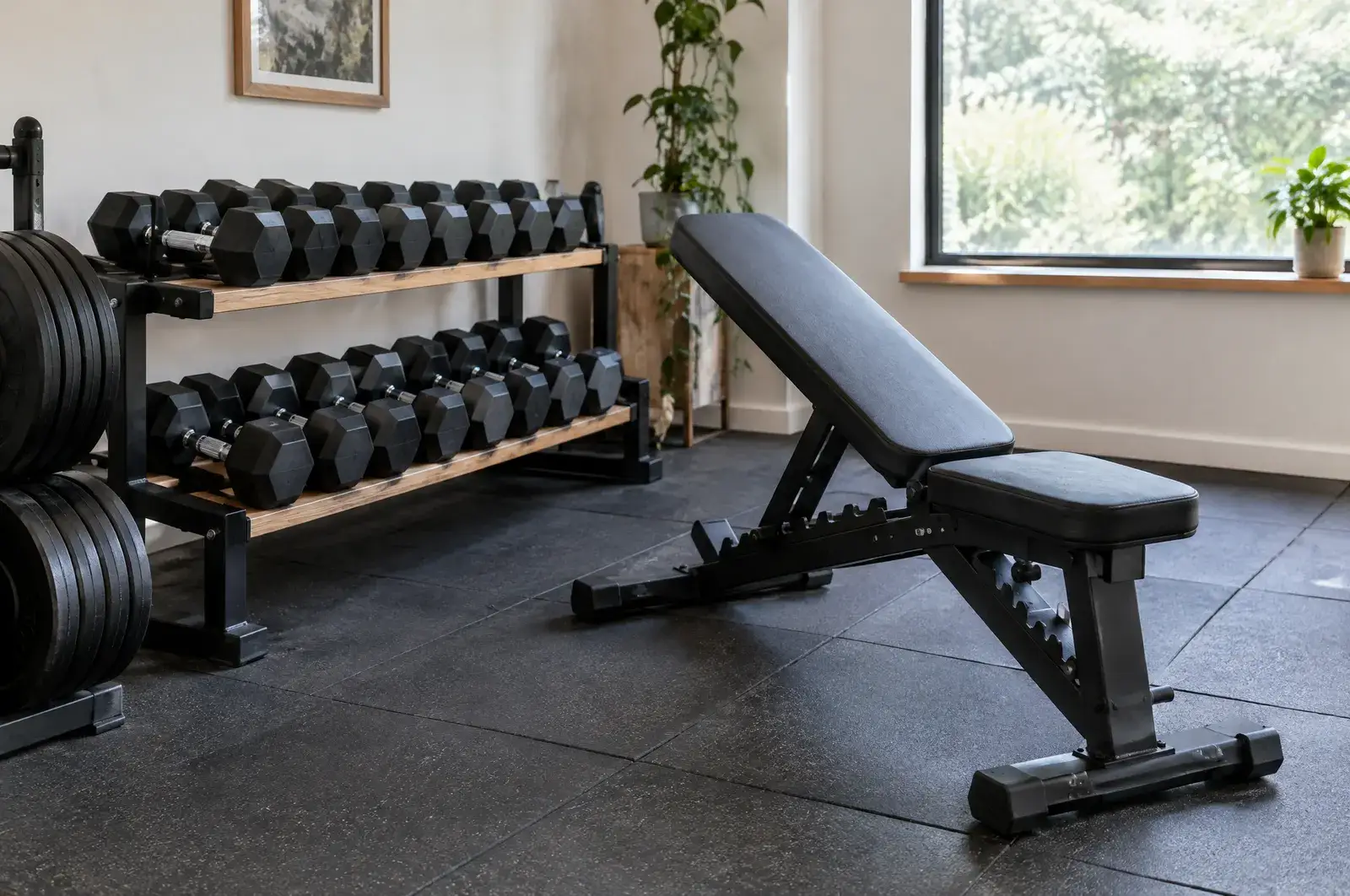
Lock the backrest into position and give it a shake test before loading weight, since a bench that shifts mid-set is a fall risk. RXD’s catalog lists three bench types by function rather than a fixed angle count, so check the specific product page for the exact settings available on your model.
- FIDAB-101 Flat/Incline Bench — flat and incline positions.
- FIDB-300 Flat/Incline/Decline Bench — adds a decline setting to flat and incline.
- FIDAB-2 Adjustable Bench — adjustable positioning, exact angle range not listed on our product research.
If you’re buying rather than adjusting, RitFit’s 1300lb Adjustable Weight Bench BWB01 lists a $269.99 price at RitFit as one budget reference point. For pairing a bench with a rack, best home gym equipment covers bundles that include both.
Bench types at a glance
| Bench model | Maker | Positions listed | Price |
|---|---|---|---|
| FIDAB-101 Flat/Incline Bench | RXD | Flat, incline | Not listed (product page shows $0.00 placeholder) |
| FIDB-300 Flat/Incline/Decline Bench | RXD | Flat, incline, decline | Not listed (product page shows $0.00 placeholder) |
| FIDAB-2 Adjustable Bench | RXD | Adjustable (range not listed) | Not listed (product page shows $0.00 placeholder) |
| RitFit BWB01 Adjustable Weight Bench | RitFit | Adjustable | $269.99 (Pink, RitFit) |
The $0.00 figures on RXD’s site reflect placeholder pricing on our product research — check the live product page for current cost before buying.
How do you load and store weights safely?
Load plates evenly on both sides of a bar or pin stack, and never let a loaded rack, bench or cable frame sit unbalanced. Uneven loading strains rails and bearings on Smith machines and functional trainers faster than on a plain barbell.
Rep Fitness’s flooring guidance applies directly here: “Lift and move equipment instead of dragging it across the floor,” and avoid “dropping heavy weights directly onto them, as this can cause dents or damage.” That advice covers plates, dumbbells and any rack accessories you reposition between sessions. If your gym sits on rubber mats or tiles, treat every plate drop and every equipment move the same way — controlled, not dragged or dropped.
For storage, RitFit’s P9 package includes integrated weight storage built into the rack frame, which keeps loose plates off the floor between sets and reduces trip hazards. If your rack lacks built-in storage, a dedicated plate tree or rack-mounted holder does the same job — see best wall-mounted gym equipment for space-saving storage options.
How do you handle equipment with electrical parts?
Never upgrade a breaker yourself to power motorized gym gear — get a licensed electrician to confirm your wiring can handle the load first. This applies to anything with a motor: treadmills, some Smith machine cable systems with electric adjustment, and powered attachments some racks now offer.
Rep Fitness is direct on this point: “Do not simply upgrade a 15-amp breaker to 20-amps on existing wiring… creates fire hazards and voids the equipment warranty. A licensed electrician should assess whether existing wiring is adequate.” None of the products in this guide’s our product research lists electrical specs, so treat any motorized attachment as a separate check from the mechanical setup steps above — read its manual and consult an electrician before plugging it in.
If your garage gym setup includes climate control alongside motorized equipment, how to heat a garage gym covers the separate question of keeping the space usable in cold weather.
How do costs compare if you’re renting instead of buying?
Renting shifts the “how do I use it correctly” question to a shorter timeline, since you’re less likely to invest in permanent safety upgrades like anchored racks. If you’re deciding between owning equipment you’ll set up once and use for years versus a shorter-term rental, renting gym equipment vs buying covers that tradeoff in more depth. Either way, the setup steps above — safety pins, even loading, controlled plate drops — apply whether the gear is yours or borrowed.
What if I don’t have room for a full rack setup?
Not every home gym has space for a 3x3 power rack and a separate cable trainer. Half garage gym ideas and bodyweight gym equipment cover smaller footprints, and a wall-mounted system (see best wall-mounted gym equipment) can deliver rack and cable functions without the floor space a standalone cage needs.
Bottom line
Set safety pins or spotter arms before loading any rack, check your frame’s steel gauge against the weight you plan to lift, and load plates evenly on both sides every time. Smith machines and functional trainers add pulley heights and cable lengths to plan for — PRx Performance’s Sidewinder tops out at 250 lbs per side and up to 95 inches of cable travel, depending on rack height. Lift and move equipment instead of dragging it across mats, and never touch your home’s breaker to power motorized gear without a licensed electrician’s sign-off.
Questions
Do I need a power rack and a Smith machine?
No. A power rack (like the Osprey 3x3, $949–$999 at Fringe Sport) suits free-weight squats and presses with safety pins. A Smith machine, such as the RX3 Tornado Compact ($3,987–$4,007 at RXD), guides the bar on fixed rails, which can help beginners learn bar path before moving to free weights.
What steel gauge should a power rack frame be?
Our product research lists two examples: RitFit's P9 uses 2 in x 2 in 14-gauge steel uprights, and RXD's Tornado Smith Machine uses 3 in x 3 in 11-gauge steel with 1-inch holes on 2-inch spacing. Lower gauge numbers mean thicker steel.
How much weight can a cable/functional trainer pulley hold?
PRx Performance lists the Profile PRO Sidewinder pulley weight capacity at 250 lbs per side, with cable travel up to 95 inches depending on the rack height chosen (95 in, 89 in, or 81 in).
How do I protect my floor when using gym equipment?
Rep Fitness advises lifting and moving equipment instead of dragging it across mats or tiles, and avoiding dropping heavy weights directly onto the floor, since impact can cause dents or damage.
Can I just upgrade my breaker to run motorized gym equipment?
No. Rep Fitness warns against upgrading a 15-amp breaker to 20 amps on existing wiring, since that can create a fire hazard and void the equipment warranty. Have a licensed electrician confirm the wire gauge first.
What bench positions do adjustable benches offer?
Our product research lists three RXD bench models by function rather than angle count: the FIDAB-101 (flat/incline), the FIDB-300 (flat/incline/decline) and the FIDAB-2 (adjustable). Check the specific model page for exact angle settings before buying.
Does a home power rack need spotter arms?
Spotter arms are optional on the Osprey 3x3 from Fringe Sport, which also offers pin pipe safeties and safety straps as add-on choices. Pick at least one safety option before lifting near failure without a spotter.
Sources
Every fact on this page comes from the sources below. We did not test these products by hand.
- RitFit P9 Multi-Functional Modular Power Cage Package — RitFit, accessed
- Osprey Commercial Power Cage (3x3) — Fringe Sport, accessed
- RX3 Tornado Compact Smith Machine Rack — RXD, accessed
- Profile PRO Sidewinder functional trainer — PRx Performance, accessed
- How to clean your rubber gym floor mats and tiles — Rep Fitness, accessed
- FIDAB-101 Flat/Incline Bench — RXD, accessed